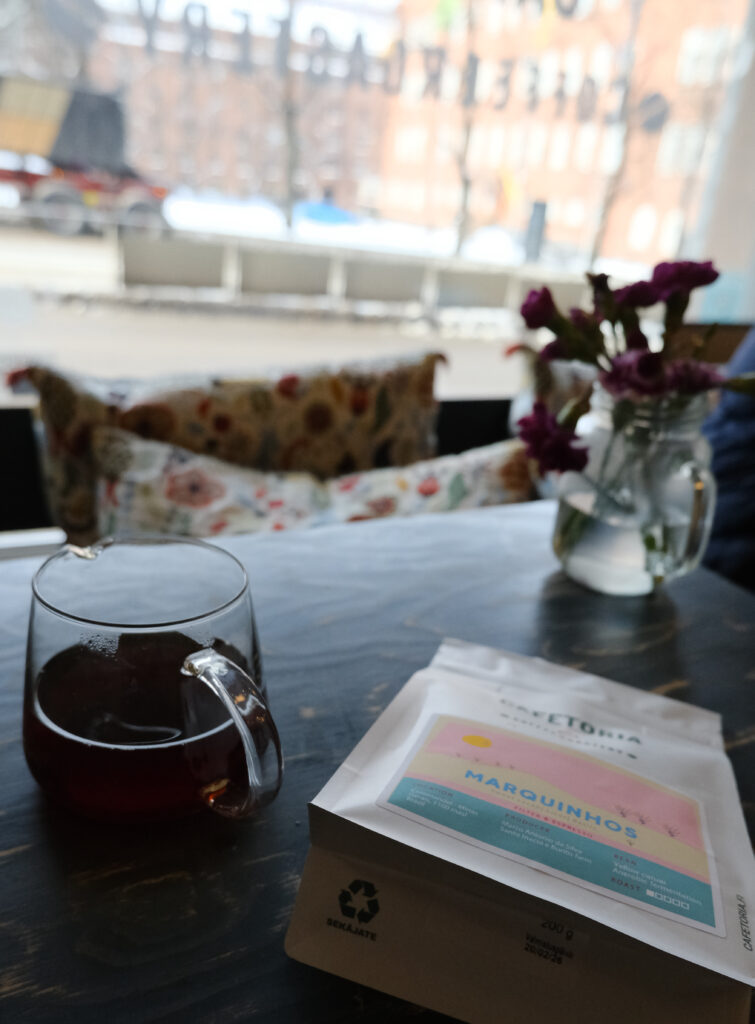


Let’s talk about Marquino — our Brazilian microlot 
Recently we’ve been enjoying some exceptional coffees from Brazil. Last year we featured coffees from the São Silvestre farm in Minas Gerais — one processed with anaerobic fermentation and another with carbonic maceration. Both were remarkable. In fact, the carbonic maceration lot placed 5th out of 15 coffees in the Filter of the Year competition — surpassed only by four Colombian coffees. Not a bad result for a Brazilian!
It shows that a new strategy adopted by some Brazilian producers is working: by combining carefully selected cherries with innovative fermentation methods, they can create coffees with vibrant characteristics often associated with high-altitude regions like Colombia or Kenya.
Marquino is the perfect successor to those coffees.
Like São Silvestre, this coffee reflects meticulous work from cherry selection to fermentation. The producer, Marco Antonio da Silva — affectionately called Marquinho — has dedicated years to improving the quality of his coffee. His efforts have been rewarded with recognitions such as Best Fermented Coffee and 2nd Best Natural Coffee in regional competitions.
Like many exceptional Brazilian microlots, we roast this coffee light. While we also enjoy darker roasts, a darker profile would hide many of the delicate flavour attributes that make this coffee special.
Brazilian coffees are typically grown at moderate altitudes, which means the beans are generally less dense than those from very high elevations. Because of this, they do not tolerate extremely aggressive roasting temperatures. In addition, Brazilian coffees naturally have lower acidity, so there is little reason to apply heavy heat to soften the cup.
Marquino expresses a beautiful aromatic profile:
berries, milk chocolate, toffee, and caramel.
When brewing, the same philosophy applies as with roasting: too much heat can flatten the flavours. We find that this coffee performs beautifully with filter brewing and electric brewers, producing a sweet and balanced cup — a good sign that the roasting has captured its character.
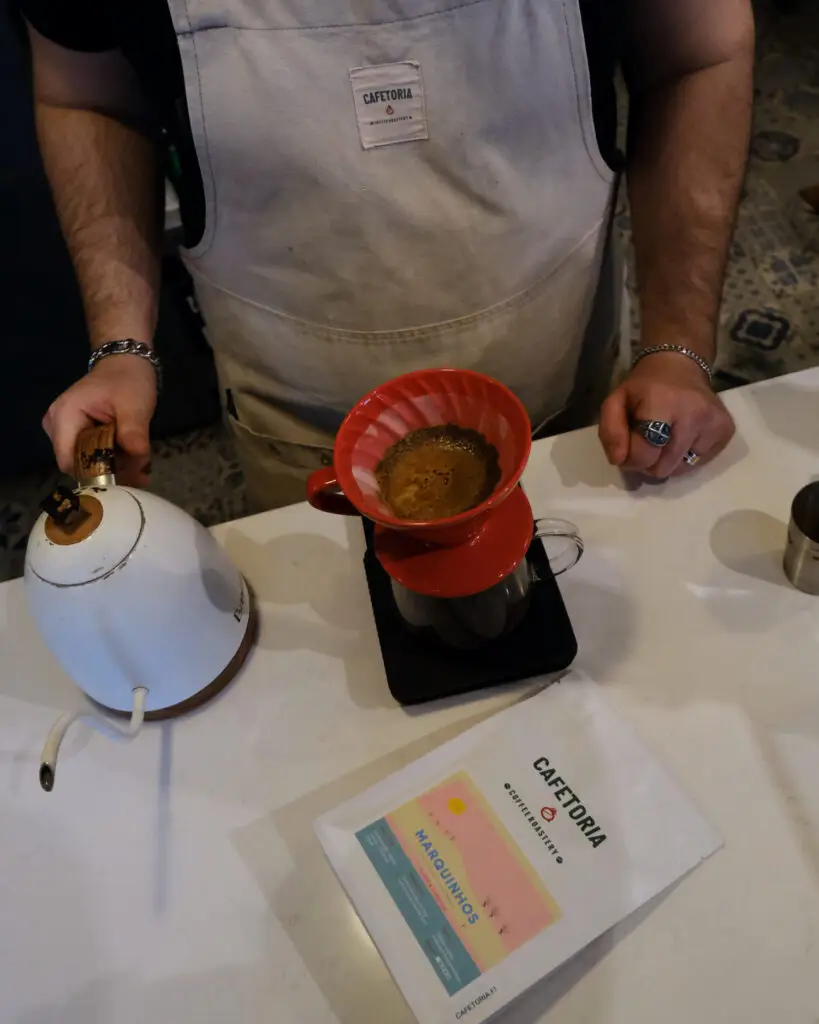
For pour-over we use:
18 g coffee
280 g water
92 °C water temperature
Brew time: 2:30–3:00
This temperature allows the coffee to show both complexity and sweetness. We haven’t extensively tested higher temperatures, but following the same logic used in roasting, we suspect that very hot water might flatten the flavour profile.
If you have the time, try brewing it at a slightly higher temperature — and let us know what you discover!
Interested in Marquinho? Buy it here